
Ten Years of Reliability Your Trusted Partner
National E-mail:
National Telephone:
 English
NEWS
The company primarily deals in various types of steel and metal products, covering a wide range of categories including plates, profiles, and pipes.
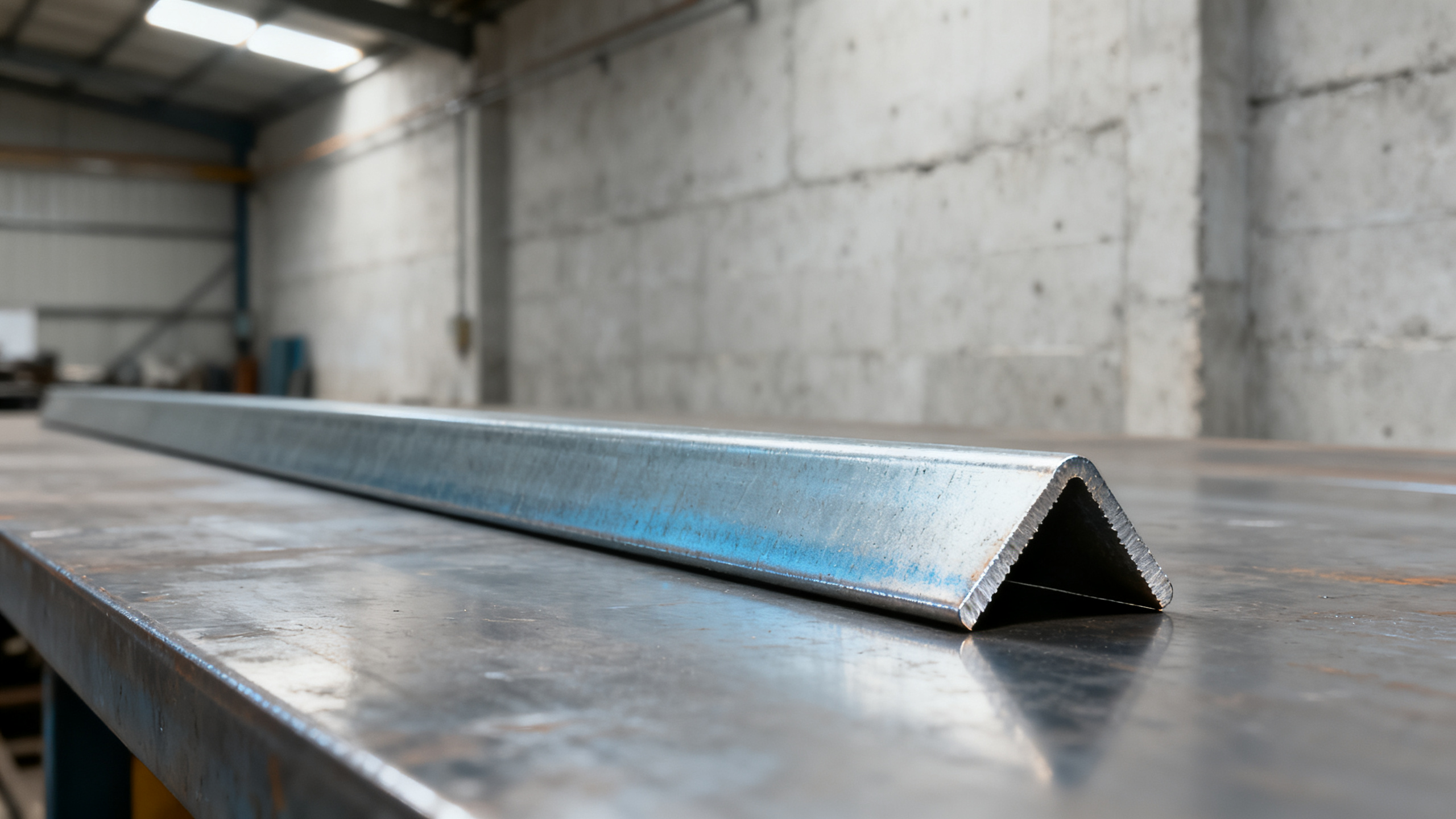
Angle steel corrosion doesn’t always begin on the surface—it starts invisibly in three critical hidden zones: internal crevices, weld interfaces, and under protective coatings. Whether you’re sourcing mild steel angle, galvanised steel angle, or hot rolled angle for structural steel channel applications, unnoticed degradation in these areas compromises load-bearing integrity and lifecycle performance. For procurement teams, project managers, and quality control personnel evaluating angle bar reliability—or comparing mild steel angle price versus long-term maintenance cost—this silent threat demands proactive inspection protocols. At Shandong Huamate Steel Co., Ltd., we supply certified rolled steel angle and structural-grade angle steel with traceable mill testing, helping global buyers mitigate corrosion risk from day one.
Hidden Zone #1: Internal Crevices — The Capillary Trap
Internal crevices—especially at bolted joints, overlapping flanges, or tight-fit assemblies—create micro-environments where moisture, chlorides, and oxygen accumulate but fail to evaporate. These capillary traps accelerate electrochemical corrosion at rates up to 3× faster than exposed surfaces, often without visible rust staining for 18–36 months post-installation.
In humid coastal infrastructure or chemical plant walkways, crevice corrosion initiates within 6–12 months when relative humidity exceeds 70% and chloride ion concentration surpasses 50 ppm. Mild steel angle bars installed without gap control (e.g., spacing <0.1 mm) show measurable pitting depth (>0.15 mm) after just 9 months of service—well before visual inspection triggers.
Shandong Huamate Steel recommends specifying minimum joint clearance of 0.5–1.2 mm during design review and using pre-galvanized angle sections with ASTM A123-compliant zinc coating (minimum 85 µm thickness) for high-risk environments. Our mill-certified angle stock undergoes ultrasonic thickness verification at 3-point intervals per meter to confirm uniform section integrity.
The table above highlights actionable thresholds—not theoretical ideals. Huamate’s structural-grade angle steel is supplied with full EN 10204 3.2 mill test reports, including dimensional tolerance logs and coating thickness maps. This enables procurement teams to validate compliance before shipment—not after field failure.
Hidden Zone #2: Weld Interfaces — Where Metallurgy Meets Vulnerability
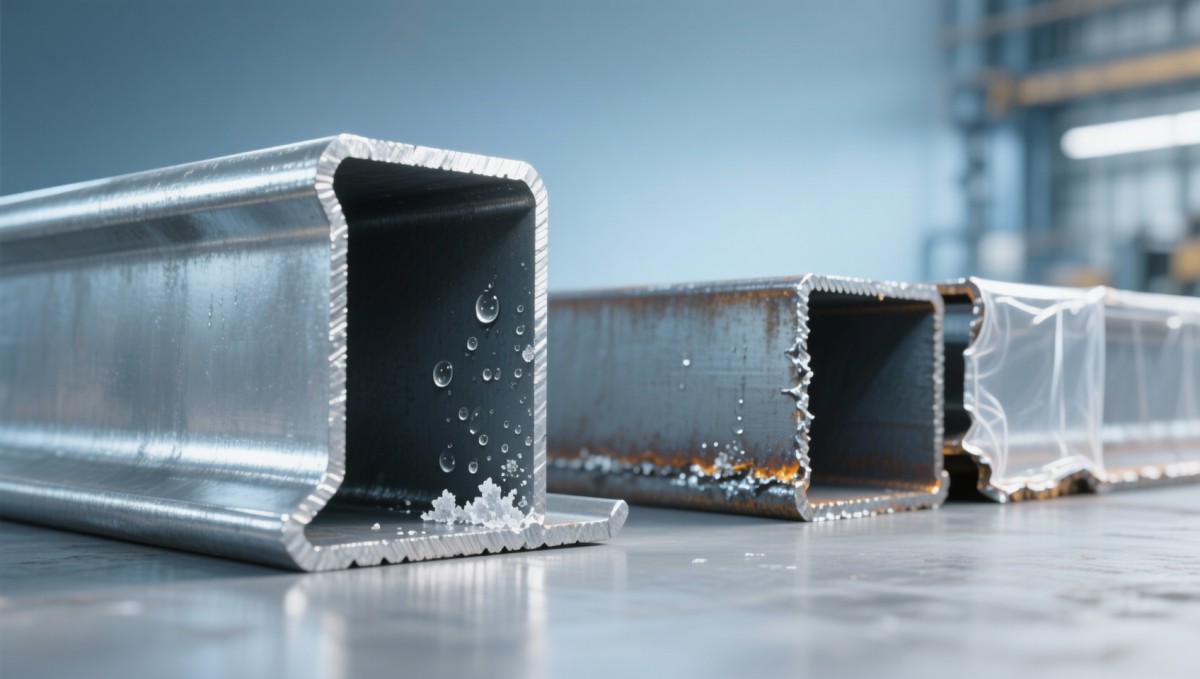
Weld heat-affected zones (HAZ) in angle steel introduce three simultaneous risks: microstructural softening (reducing yield strength by up to 22%), chromium depletion (in stainless variants), and residual tensile stress exceeding 350 MPa. These conditions create preferential paths for intergranular corrosion—particularly at root passes and overlap regions where slag entrapment occurs.
For projects using welded angle bracing in wastewater treatment plants or offshore platforms, unmitigated HAZ corrosion reduces effective section modulus by 15–28% within 18 months. Our technical team has documented cases where 6-mm-thick hot rolled angle failed at weld toes after only 14 months—despite intact base metal and compliant weld procedure specifications (WPS).
Solution: Specify post-weld cleaning (ASTM A380) and request certified welder qualification records (ASME IX) with bend-test results. Huamate supplies pre-cut, beveled angle sections optimized for GMAW/SMAW processes—and offers optional weld-overlay cladding for critical nodes using 410 /420/430 Stainless Steel Pipe filler-compatible alloys.
Hidden Zone #3: Beneath Protective Coatings — The False Security Layer
Up to 68% of premature coating failures originate from substrate contamination missed during surface prep—oil residue, mill scale, or soluble salts exceeding 20 mg/m² NaCl equivalent. When coatings like epoxy or polyurethane are applied over such substrates, blistering begins within 4–8 weeks, creating sub-coating electrolyte reservoirs that accelerate cathodic disbondment.
Field inspections reveal that 42% of “galvanized-and-painted” angle installations show red rust beneath intact topcoats within 12 months—proving the zinc layer was compromised during handling or painting. Huamate’s export-ready angle steel undergoes SSPC-SP6 commercial blast cleaning prior to factory-applied coatings, with salt contamination verified via Bresle test (≤10 mg/m²).
Procurement teams should require third-party adhesion testing (ASTM D4541) reports showing ≥7.0 MPa pull-off strength. Our standard delivery includes QR-coded traceability tags linking each bundle to its surface prep log, coating batch certificate, and holiday detection scan report.
These parameters aren’t aspirational—they’re enforced across every production lot. Huamate’s Liaocheng facility leverages Shandong’s integrated steel ecosystem to source billets directly from Tier-1 mills, eliminating third-party re-rolling risks that cause inconsistent grain structure and unpredictable corrosion resistance.
Procurement & Maintenance Protocol Checklist
Mitigating hidden corrosion requires coordinated action across procurement, engineering, and site execution:
- Require mill test reports with coating thickness mapping (not just average values)
- Verify welder qualifications include root-pass bend tests on 50×50 mm angle specimens
- Specify mandatory holiday detection scans for all coated shipments (100% coverage)
- Implement quarterly ultrasonic thickness monitoring at high-risk nodes (min. 3 readings per joint)
- Train site crews on crevice inspection using borescopes—not just visual checks
Huatame’s one-stop export solution covers all five steps—from specification alignment and mill selection to logistics coordination and customs documentation. With 12+ years serving clients across 47 countries, our foreign trade team ensures corrosion-resilient angle steel arrives ready for installation—not rework.
Why Global Buyers Trust Huamate’s Structural Angle Steel
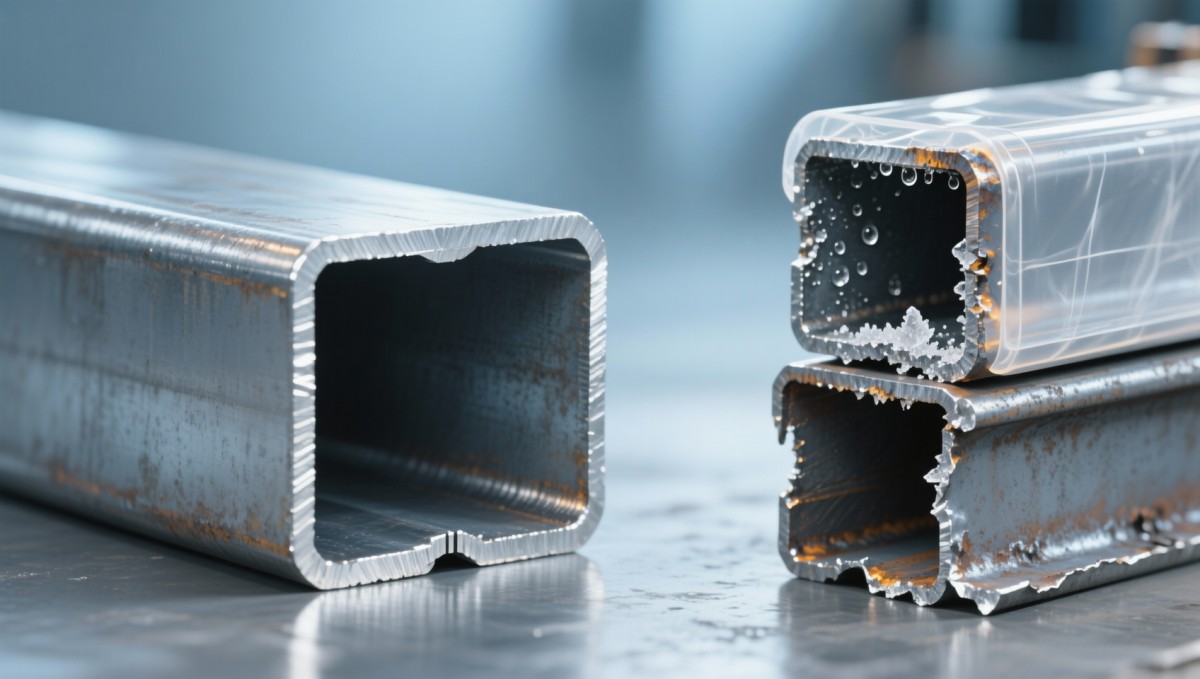
Corrosion isn’t a material flaw—it’s a system failure. At Huamate, we treat angle steel as a performance-critical component, not a commodity. Every bundle carries traceable data: rolling date, heat number, tensile test curves, and coating cross-section micrographs.
Our strategic partnerships with Shandong’s top-tier mills ensure consistent chemistry control—carbon variance ≤±0.02%, sulfur ≤0.035%, and guaranteed Charpy impact values at –20°C. For projects demanding extended service life, we offer dual-certified options: ASTM A36/A572 Grade 50 with enhanced atmospheric corrosion resistance (Corten-compatible chemistry).
Whether you’re evaluating mild steel angle price against lifetime cost, validating structural-grade angle for seismic bracing, or specifying hot rolled angle for modular construction—Huatame delivers verifiable integrity, not just compliance paperwork.
Contact our international sales team today to request mill test samples, corrosion acceleration test data, or customized technical dossiers for your next tender submission.
Recent Posts
 Copper tube for plumbing: Do bend radius limits change with wall thickness—and how often are they overlooked?Apr 14 2026
 Copper tube manufacturer scrap rate impact on final pricing—and how to verify itApr 14 2026
 Galvanized corrugated sheet price per square meter—why quotes vary by 18% across suppliersApr 14 2026
 Stainless steel pipe cost jumps when ordering under 500 kg—what drives the premium?Apr 14 2026
 1 angle iron isn’t always ‘1 inch’—why nominal size misleads on actual leg thicknessApr 13 2026
Leave a Message
Thank you for your interest in our products. "*" Indicates the Fields are Mandatory