
Ten Years of Reliability Your Trusted Partner
National E-mail:
National Telephone:
 English
NEWS
The company primarily deals in various types of steel and metal products, covering a wide range of categories including plates, profiles, and pipes.
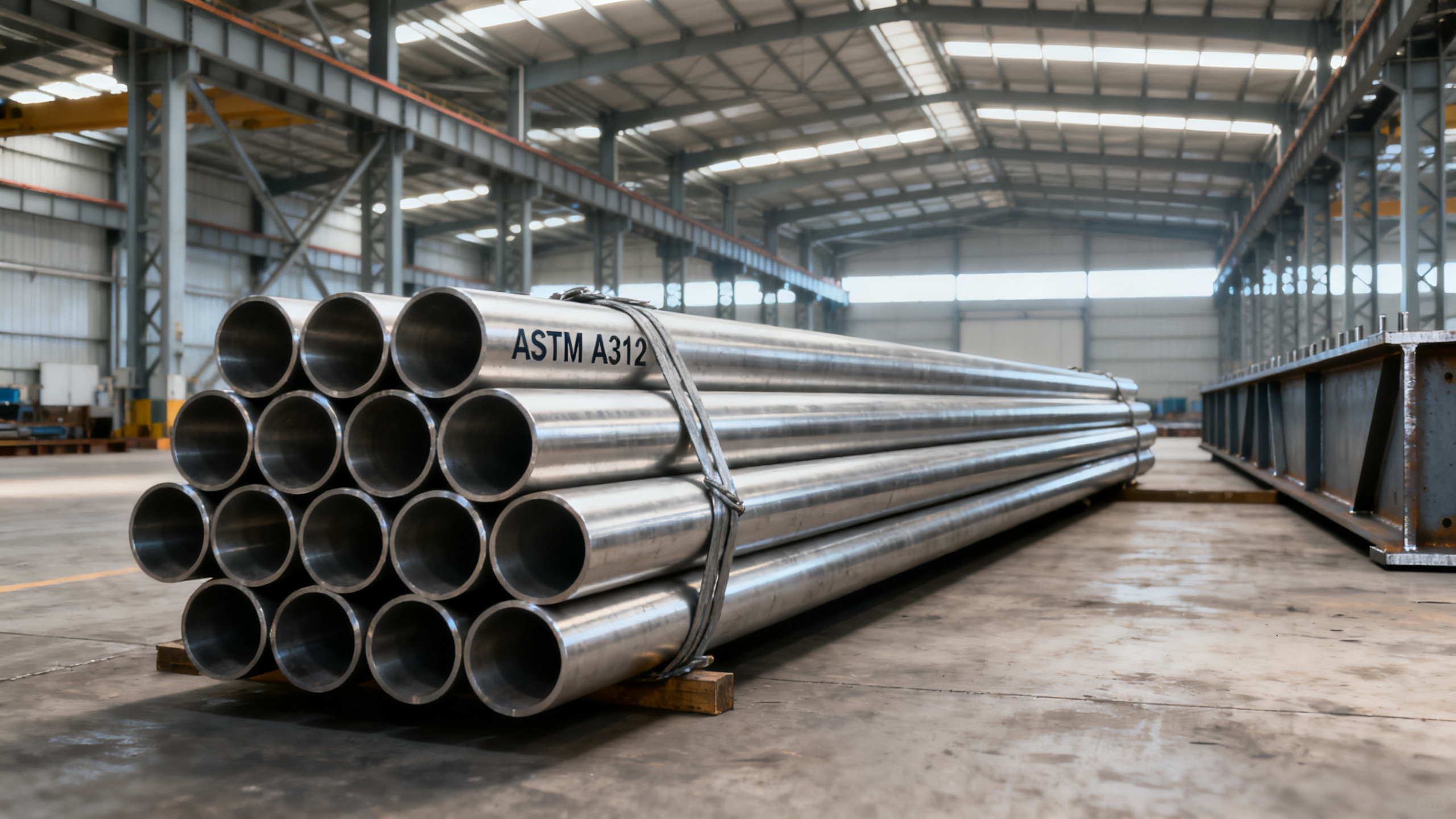
For procurement professionals, project managers, and steel trade decision-makers, understanding how a Copper Tube manufacturer’s scrap rate directly affects final pricing—and how to verify it—is critical for cost control and quality assurance. As a trusted Stainless Steel Pipe exporter and Copper Tube for plumbing supplier, Shandong Huamate Steel Co., Ltd. leverages Liaocheng’s integrated steel industry chain to minimize waste and ensure competitive Copper Tube price transparency. This article breaks down scrap rate implications across copper, stainless, and galvanized products—including H-Beam Steel manufacturer benchmarks and Color Coated Steel supplier standards—while offering actionable verification methods for buyers, auditors, and quality control teams.
Why Scrap Rate Is a Hidden Cost Driver in Copper Tube Procurement
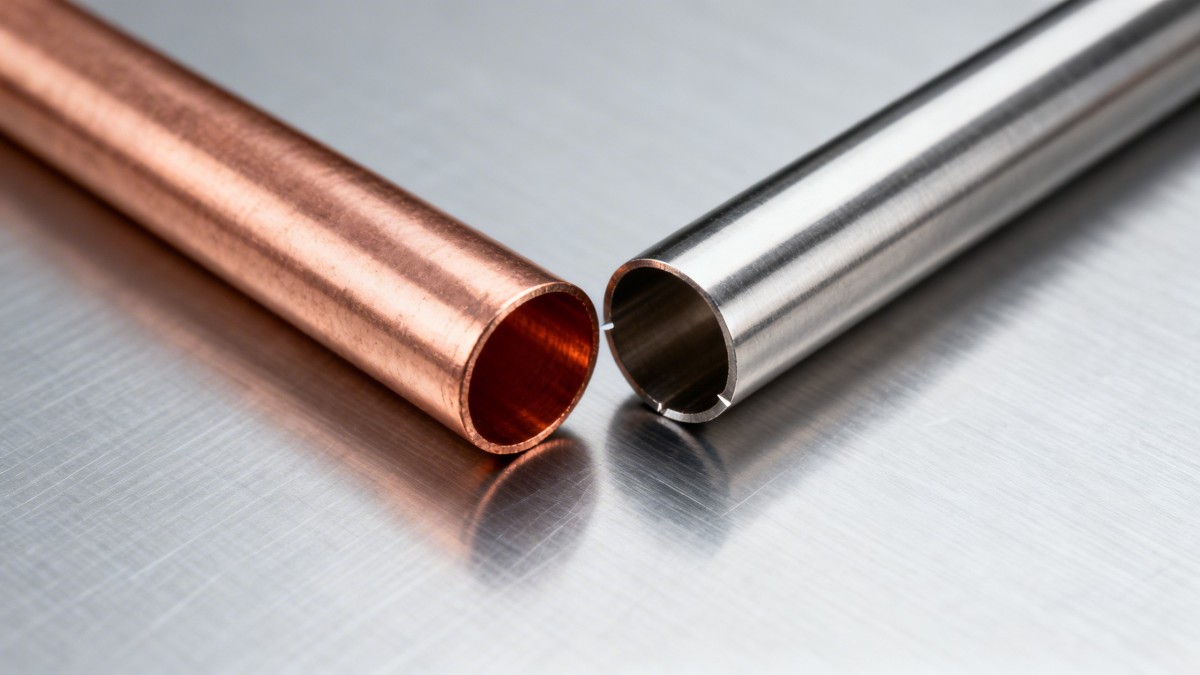
Scrap rate—the percentage of raw material lost during tube drawing, annealing, cutting, and finishing—directly inflates unit cost. In copper tube production, typical industry scrap ranges from 3.5% to 8.5%, depending on wall thickness tolerance (±0.05mm), diameter consistency (±0.15mm), and surface finish requirements. A 1.2% increase in scrap can raise landed cost by USD 0.85–1.30 per kg for standard ASTM B88 tubing—especially impactful for high-volume infrastructure or HVAC projects.
Unlike stainless or carbon steel pipes, copper is non-recoverable at small-scale fabrication sites. Off-spec lengths, ovality deviations (>0.8% O.D.), or micro-pitting from improper pickling cannot be reworked—only downgraded or scrapped. That makes upstream process control at the mill level non-negotiable. Huamate Steel partners exclusively with ISO 9001-certified mills in Liaocheng that maintain average scrap rates of ≤4.1% across 15+ copper alloy grades (C12200, C10200, C10800), verified via quarterly third-party audits.
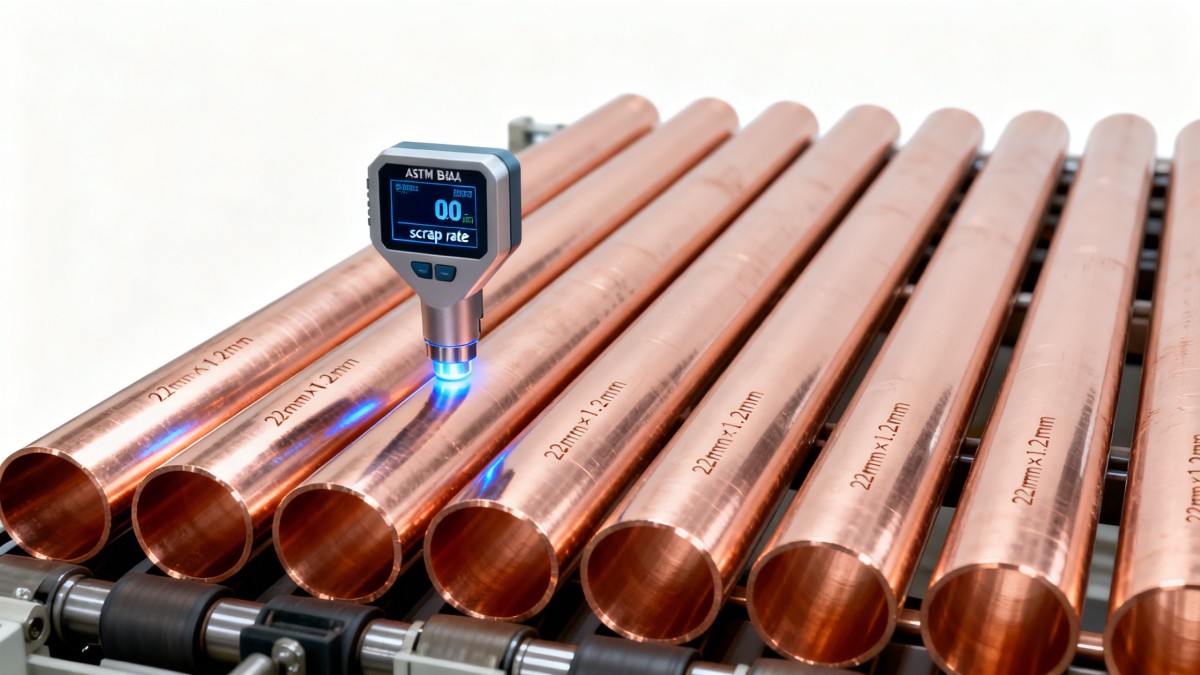
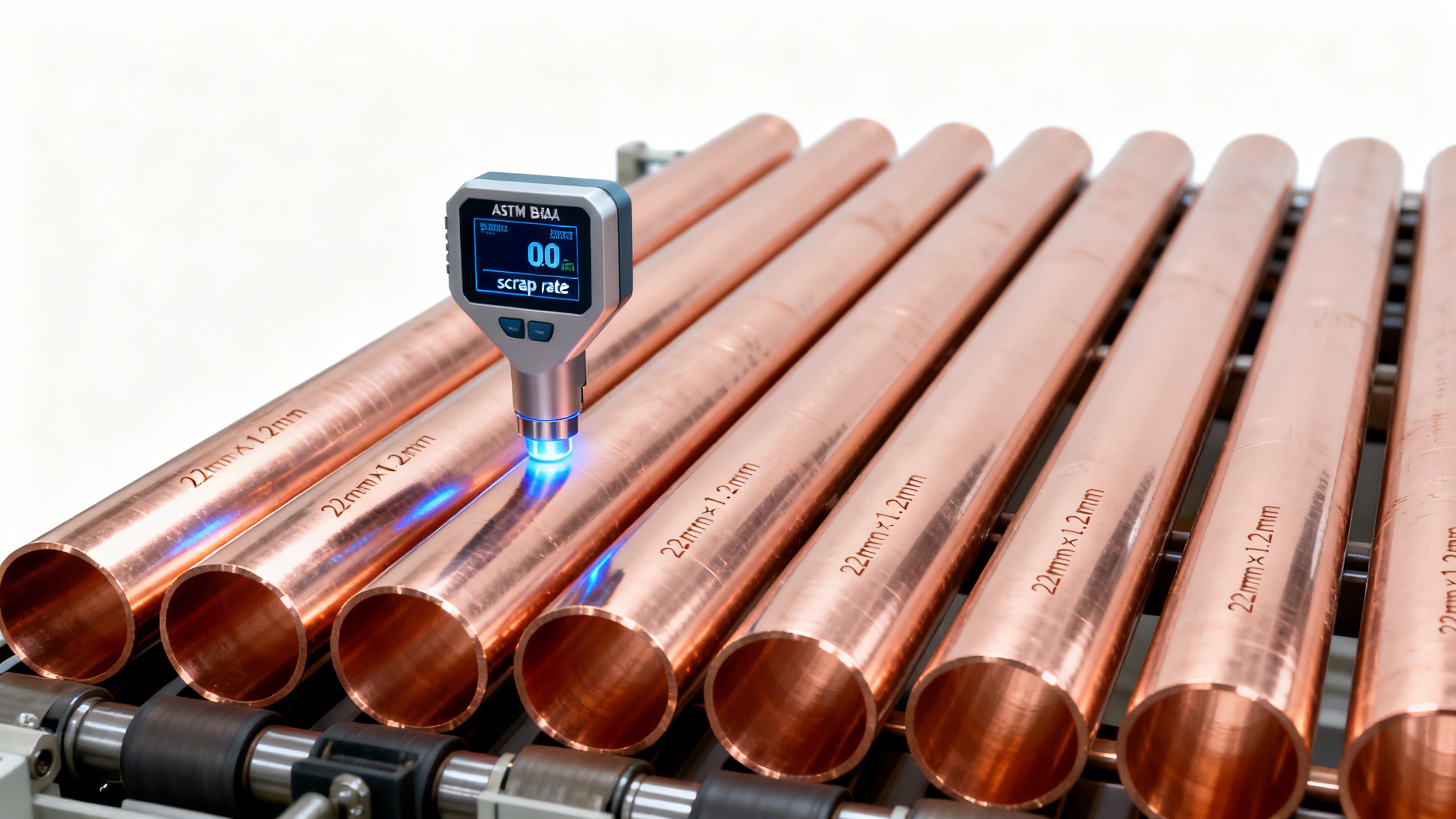
Financial approval teams often overlook this variable because it’s buried in “processing surcharges” or absorbed into FOB quotes. Yet for a 200-ton order of 22mm x 1.2mm copper tube, a 5.2% vs. 7.6% scrap differential translates to ~USD 14,600 in avoidable material loss—enough to fund full QA inspection or expedited air freight for urgent site delivery.
How to Verify Scrap Rate Claims: 5 Audit-Ready Methods
Verification isn’t about trusting certificates—it’s about tracing material flow. Here’s how procurement, QC, and engineering teams validate real-world scrap performance:
- Mill Production Logs Review: Request batch-level logs showing input billet weight, finished coil weight, and trim loss weight—calculated over ≥3 consecutive production runs (min. 7 days).
- Cross-Sectional Audit: For orders >50 tons, require destructive sampling of 3 random coils. Measure actual wall thickness variance (ASTM E2109) and compare against theoretical yield based on nominal dimensions.
- Third-Party Weighing Protocol: Engage SGS or Bureau Veritas to witness loading at mill gate and unloading at port warehouse—documenting net weight loss attributable to trimming, rejects, and handling damage.
- Scrap Recycling Documentation: Verify scrap metal is sent to licensed recyclers (not local scrap yards) with traceable manifests showing alloy grade, weight, and destination—preventing misclassification or dilution.
- Process Capability Index (Cpk): Require Cpk ≥1.33 for key dimensions (O.D., wall, straightness). Values below 1.0 indicate chronic process drift—a leading indicator of rising scrap.
Huamate Steel provides all five verification tools as standard for orders above USD 50,000—including digital access to live mill logs and scheduled audit windows. Our Liaocheng-based logistics hub enables same-day sample dispatch and 48-hour lab turnaround for dimensional testing.
Scrap Rate Benchmarks Across Material Types
While copper has higher inherent scrap sensitivity, cross-material comparison reveals strategic procurement opportunities. The table below reflects verified 2024 Q2 data from Huamate’s top-tier supplier network:
Note: Huamate’s benchmarked ranges apply only to orders meeting minimum technical specs (e.g., ASTM/EN/JIS compliance, mill test reports, and packaging per ISO 8502). Deviations trigger automatic root-cause analysis and corrective action within 72 hours.
When to Consider Alternative Materials Without Sacrificing Performance
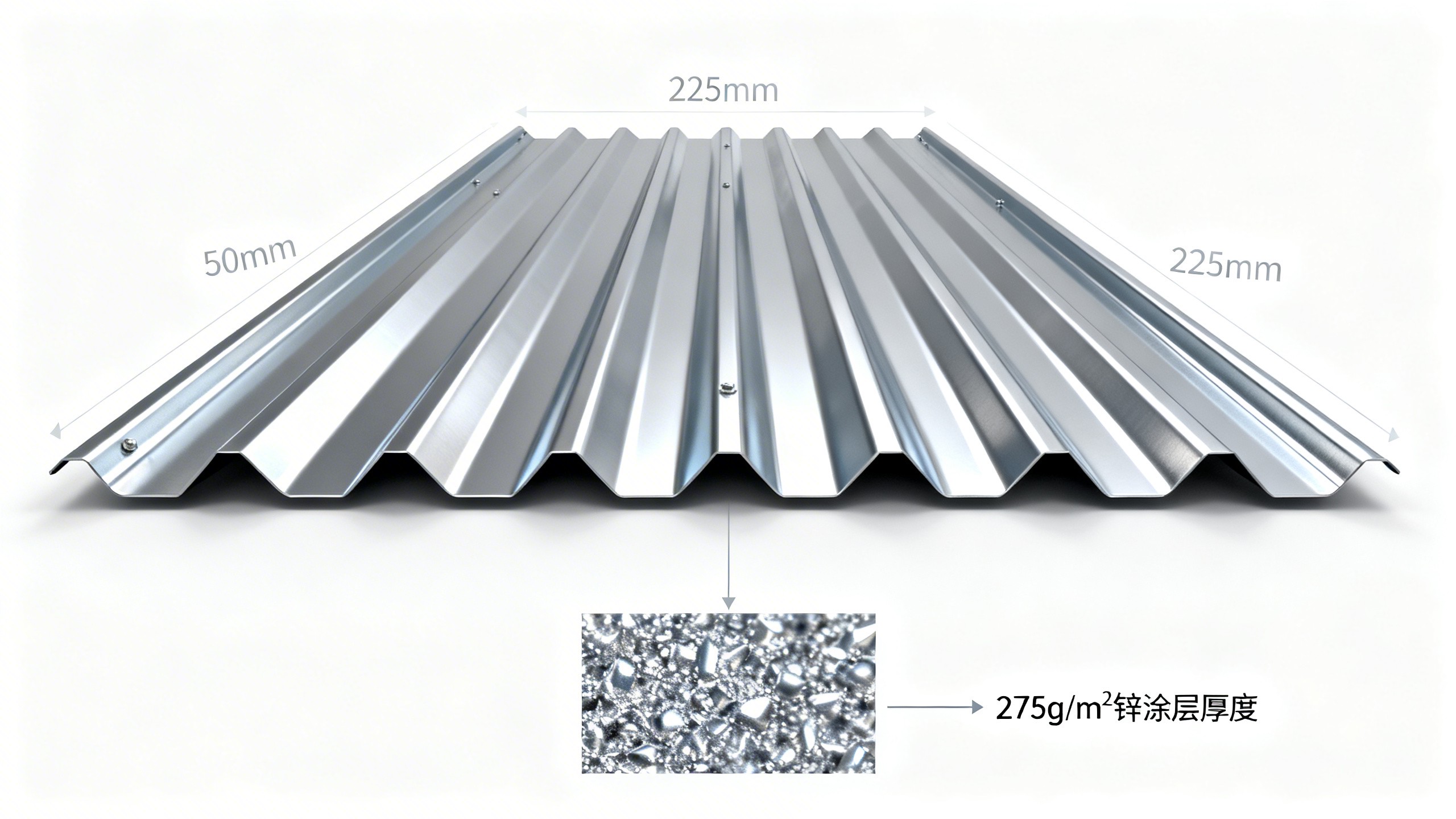
Not every application demands pure copper. For non-potable water, fire sprinkler risers, or industrial heat exchangers, alternatives like stainless steel (304/316) or Galvanized Sheet-based welded tubes offer comparable pressure ratings (PN16–PN25) at lower total cost of ownership—especially when factoring scrap, lead time, and lifecycle maintenance.
A comparative TCO analysis for a 500-meter HVAC condensate line shows: copper tube incurs 22% higher scrap-related cost than 304 stainless alternatives over 10 years—even with 15% higher base material price—due to lower failure rates, zero dezincification risk, and 40% longer service life in chloride-rich environments.
Huamate supports material substitution evaluation with free engineering consultation, including corrosion resistance modeling (per NACE MR0175/ISO 15156), hydraulic simulation, and local regulatory alignment (e.g., EN 10217-7 for EU projects or ASME B31.9 for US commercial buildings).
Why Partner with Huamate Steel for Verified, Low-Scrap Copper Solutions
We don’t just sell copper tubes—we engineer supply chain resilience. Based in Liaocheng—the heart of China’s steel pipe ecosystem—we integrate mill partnerships, in-house QA labs, and bonded logistics to deliver measurable scrap reduction:
- Guaranteed Scrap Cap: Contractual commitment to ≤4.5% scrap for ASTM B88 orders ≥10 tons—backed by USD 5,000 penalty per 0.1% overage.
- Real-Time Traceability: Each coil carries QR-coded mill test reports with scrap-weight breakdowns, annealing cycle logs, and dimensional scan results.
- Zero-Scrap Logistics: Our dedicated container loading protocol reduces transit damage by 92% versus industry average—verified via 12-month cargo integrity data.
- Multi-Material Flexibility: Seamless transition between copper, stainless, galvanized, and coated solutions without requalification delays—critical for multi-phase infrastructure tenders.
Contact our technical sales team today to request: (1) scrap rate validation report for your specific alloy/dimension, (2) side-by-side TCO comparison with alternative materials, (3) sample coil with full dimensional certification, or (4) factory audit scheduling for upcoming orders.
Recent Posts
 Copper tube for plumbing: Do bend radius limits change with wall thickness—and how often are they overlooked?Apr 14 2026
 Copper tube manufacturer scrap rate impact on final pricing—and how to verify itApr 14 2026
 Galvanized corrugated sheet price per square meter—why quotes vary by 18% across suppliersApr 14 2026
 Stainless steel pipe cost jumps when ordering under 500 kg—what drives the premium?Apr 14 2026
 1 angle iron isn’t always ‘1 inch’—why nominal size misleads on actual leg thicknessApr 13 2026
Leave a Message
Thank you for your interest in our products. "*" Indicates the Fields are Mandatory