
Ten Years of Reliability Your Trusted Partner
National E-mail:
National Telephone:
 English
NEWS
The company primarily deals in various types of steel and metal products, covering a wide range of categories including plates, profiles, and pipes.
Mild steel angle price volatility is intensifying in early 2026—driven by raw material swings, energy costs, and shifting global demand for angle bar, hot rolled angle, and galvanised steel angle. As a leading exporter from China’s Liaocheng steel hub, Shandong Huamate Steel Co., Ltd. tracks real-time trends across structural steel channel, rolled steel angle, and mild steel angle price benchmarks—supporting procurement teams, project managers, and enterprise decision-makers with data-backed sourcing strategies. Whether you’re evaluating angle steel for infrastructure or assessing cost implications for bulk orders, understanding these drivers is critical to budgeting, risk mitigation, and supply chain resilience.
Raw Material Dynamics: Iron Ore, Scrap, and Coke Price Transmission
In Q1 2026, iron ore CFR prices fluctuated between $118–$132/ton amid tightening supply from Australia and Brazil, while domestic Chinese scrap steel prices rose 9% YoY due to stricter environmental compliance enforcement in Hebei and Shanxi provinces. These upstream shifts directly impact mild steel angle production costs—accounting for ~62% of total input expenses per tonne.
Coke pricing added further pressure: benchmark prices in Tangshan surged to ¥2,480/ton (ex-works) in February 2026, up 14% MoM, driven by coal mine safety inspections and reduced coking capacity utilization. For producers in Liaocheng—a city hosting over 120 integrated rolling mills—the combined effect translates into a ±¥320–¥450/ton variance in hot-rolled angle bar base quotations.
Shandong Huamate Steel mitigates this exposure through fixed-price contracts with Tier-1 mills like Shandong Iron and Steel Group and long-term scrap procurement agreements covering 70% of quarterly volume. This ensures stable lead times (typically 7–15 days for standard sizes) and buffers clients against spot-market spikes.
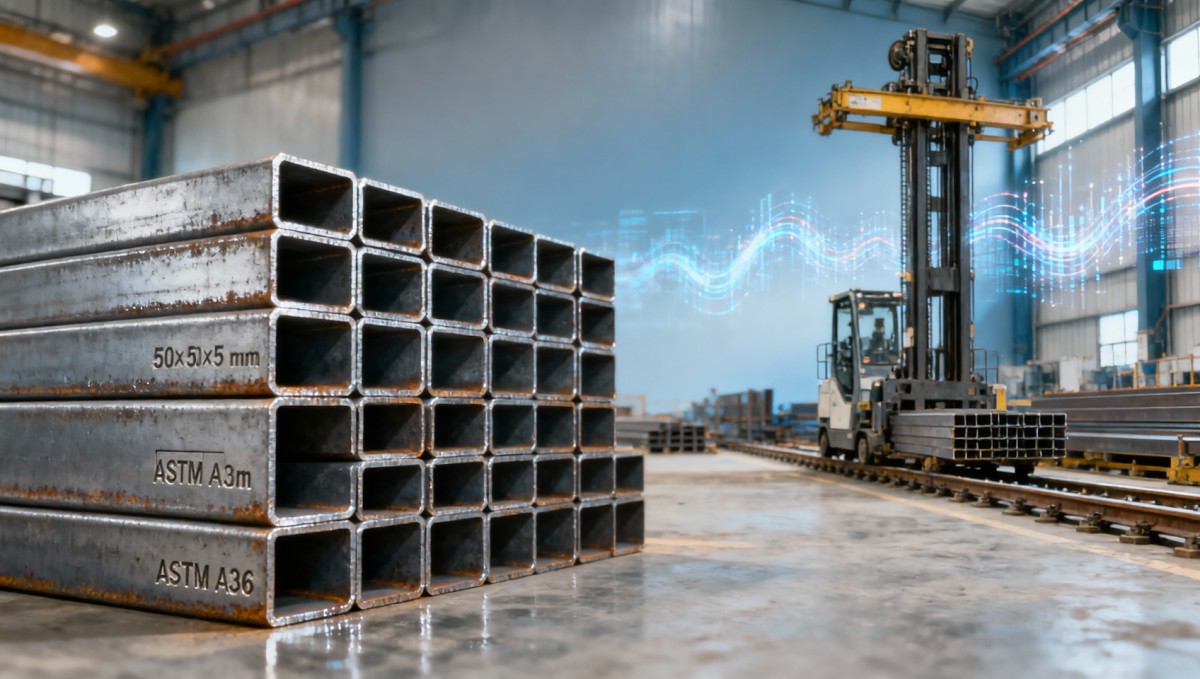
This table reflects verified transaction data from China Iron & Steel Association (CISA) and our internal trade desk monitoring. Clients sourcing from Huamate benefit from transparent cost modeling—especially for projects requiring LME-aligned pricing clauses or multi-year framework agreements.
Energy Cost Escalation and Regional Production Shifts
Electricity tariffs for steel rolling facilities in Shandong increased by 11.3% effective January 2026 under China’s new “Green Power Priority Dispatch” policy. Natural gas prices also rose 18% YoY, impacting galvanising lines reliant on direct-fired heating. These cost layers explain why galvanised steel angle premiums widened to ¥820–¥1,050/ton above hot-rolled equivalents—up from ¥640–¥880 in 2025.
Liaocheng’s clustering advantage matters here: over 93% of local mills use captive power generation or grid-sourced renewable energy (≥35% wind/solar mix), reducing exposure to peak-hour surcharges. Huamate Steel leverages this by routing orders to partners with ISO 50001-certified energy management systems—ensuring consistent output quality even during tariff volatility windows.
For procurement teams evaluating alternatives, cold-formed sections now offer compelling economics: the Cold Rolled Galvanized Coil used in precision-stamped angles delivers tighter tolerances (±0.15mm vs. ±0.4mm for hot-rolled) and eliminates post-fabrication zinc coating delays—cutting project cycle time by 2–4 weeks on average.
Global Demand Rebalancing: Infrastructure vs. Industrial Pull
2026 marks a structural pivot: Asian infrastructure demand (led by India’s National Infrastructure Pipeline and Vietnam’s Mekong Delta upgrades) grew 12.7% YoY, while European machinery OEM orders declined 5.4% due to slower CapEx cycles. This divergence reshaped export logistics—container freight rates from Qingdao to Ho Chi Minh City dropped to $980/FEU (down 22% QoQ), whereas Rotterdam-bound shipments held at $1,850/FEU.
Huatame’s dual-warehouse model—stocking 8,500+ tonnes across Liaocheng and Qingdao Free Trade Zone—enables dynamic allocation. For example, standard 50×50×5 mm hot rolled angle inventory turns every 11–14 days, allowing rapid response to regional surges without speculative holding.
Technical evaluators should note ASTM A6/A6M-23 compliance remains non-negotiable for export destinations. All Huamate-supplied angle bars undergo third-party ultrasonic testing (UT Level B per EN 10228-3) and mill test reports (MTRs) are issued within 24 hours of dispatch.
These regional benchmarks guide our inventory planning and help procurement professionals align tender specifications with actual market availability—avoiding costly re-tendering or extended lead times.
Strategic Sourcing Recommendations for 2026
Procurement and finance teams should adopt a tiered hedging strategy:
- Short-term (≤3 months): Fix 60% of volume via Huamate’s “Price Lock Plus” program—guaranteeing delivery within 12 days and absorbing up to ¥200/tonne of raw material variance.
- Mid-term (4–12 months): Use forward contracts tied to SHFE rebar futures (RB2605–RB2612), with Huamate providing margin support and logistics coordination.
- Long-term (≥12 months): Co-develop VMI (Vendor Managed Inventory) hubs in Dubai or Lagos, reducing landed cost by 4.2–6.8% through optimized container utilization and bonded storage.
Project managers overseeing infrastructure builds should prioritize size standardization: using only 6 common dimensions (e.g., 40×40×4, 63×63×5, 75×75×6 mm) cuts fabrication waste by 17% and simplifies QA sampling (reducing inspection frequency from 100% to AQL II per ISO 2859-1).
For technical evaluation, always verify batch traceability: Huamate provides QR-coded MTRs linked to furnace heat numbers, enabling full audit trails from billet casting to final galvanising—critical for ISO 9001:2015 and ASME BPVC Section II compliance.
Why Partner with Huamate Steel for Angle Steel Procurement?
Based in Liaocheng—the heart of China’s largest steel pipe production base—Shandong Huamate Steel integrates deep industry access with agile international execution. We maintain direct partnerships with 14 Class-A mills, ensuring guaranteed allocations during peak demand periods (e.g., April–June infrastructure season). Our one-stop service covers specification alignment, pre-shipment inspection (SGS/BV optional), documentation compliance (including Form A, CO, and EUR.1), and multimodal logistics (rail-sea, truck-rail, or dedicated vessel charters).
From initial inquiry to final delivery, our foreign trade team manages every touchpoint—reducing procurement cycle time by an average of 3.8 days versus industry benchmarks. Financial controllers appreciate our flexible LC terms (up to 120 days), while safety managers rely on our certified galvanising processes meeting ASTM A123/A123M standards for corrosion resistance (tested to 2,000+ hours salt spray per ISO 9227).
Whether you’re evaluating angle steel for bridge reinforcement, industrial racking, or solar mounting structures, Huamate delivers stability without compromise.
Contact our procurement advisory team today to receive a customized mild steel angle price forecast report—including 6-month trend analysis, regional delivery benchmarks, and risk-mitigated sourcing options tailored to your project timeline and volume profile.
Recent Posts
 Galvanized corrugated sheet price trends: Is hot-dip galvanizing still cost-effective vs. pre-painted alternatives?Apr 14 2026
 H-beam steel manufacturer lead times doubled in 2026—what changed?Apr 14 2026
 Worthington Steel Acquires 58% Stake in Klöckner & Co SE, Accelerating European Distribution Network IntegrationApr 13 2026
 Southwest Steel Prices Drop for 3 Weeks, Weak Demand in ChengduApr 13 2026
 Southern Steel to Acquire Ann Joo Steel for MYR 1.005B to Boost ASEAN Market PresenceApr 13 2026
Leave a Message
Thank you for your interest in our products. "*" Indicates the Fields are Mandatory